

The Morning After
There is a particular kind of silence that descends on a festival site in the hours after the last person leaves.
The stages are still standing. The lights are off. The ground holds the impression of thousands of feet. A cup rolls across an empty field in the wind. Somewhere, a crew is already disassembling a sound system that, only a few hours earlier, was moving the earth.
You can still feel the shape of what was there.
The mass of people. The heat. The sound. That strange atmosphere that only exists when a large number of humans gather to experience something together.
Then it begins draining away.
The scaffolding comes down. The fencing is rolled up. The toilets are driven away. The temporary population evaporates, and the field slowly begins to look like a field again. What remains?
Recently, under an essay about aesthetic and structural forms of community, I exchanged comments with Nicole Reese of Terrenity about festivals as temporary villages. Nicole replied with a question that has stayed with me:
“Leave no trace? What about leave such a beautiful trace that the space is forever better because of you?”
— Nicole Reese, Terrenity
The Beautiful Temporary World
First, let’s not dismiss what a festival actually does.
A well-made festival is one of the stranger and more remarkable things human beings create. It is a temporary city with its own rhythms, rules, aesthetics, economy, and social logic.
It concentrates music, art, movement, food, conversation, costume, ceremony, and a kind of freedom that is genuinely difficult to find in ordinary life.
People meet partners and they start projects.
They discover artists who change their relationship to music.
They recover parts of themselves that had gone numb.
They feel less alone in ways they could not quite manage at home.
These things are real. They are not superficial side effects of entertainment.
The aesthetic layer matters: the lighting, architecture, ritual, shared meals, costumes, sound systems, strange structures, collective movement, and the moment when thousands of people briefly seem to breathe together.
Beauty helps people imagine that another way of living might be possible.
That is not nothing.
That may be the entire reason people keep building these temporary worlds despite the weather, financial risk, sleep deprivation, logistical chaos, and portable toilets apparently designed by enemies of the human spine.
But imagining another world is the beginning, not the end.
The harder question is what happens to that imagination after the stages come down.
Leave No Trace Is the Floor
Leave No Trace is a responsible principle.
Minimize damage. Remove waste. Protect the land. Restore the site. Do not treat a place as disposable simply because the event occupying it is temporary.
None of that should be controversial.
A festival that leaves damaged soil, polluted water, abandoned materials, exhausted workers, and an alienated surrounding community is not regenerative because someone installed bamboo signage near a compost bin.
But reducing damage is a minimum standard. It is not the complete regenerative ambition.
Leave No Trace asks:
How do we avoid making this place worse?
Regeneration asks something harder:
How could this gathering leave the place, people, and culture stronger than they were before the gates opened?
That changes the standard.
The question is no longer only whether the site appears untouched after the teardown. It becomes whether the gathering created durable ecological, cultural, economic, or community value that would not have existed otherwise.
Did anything useful remain? Did the land become healthier?
Did local organizations gain resources or capacity? Did workers leave with fair pay rather than untreated injuries and vague promises?
Did the surrounding community benefit beyond three days of traffic and somebody urinating behind a petrol station?
Did the gathering strengthen anyone’s ability to build community after they returned home?
That is a considerably more demanding vision than cleaning up after yourself.
It is also closer to what the word regenerative should mean.
What a Beautiful Trace Could Look Like
Terraforma offers one useful example.
Terraforma was founded in 2014 as an experimental music festival oriented toward sustainability and artistic research. It held eight festival editions at Villa Arconati outside Milan between 2014 and 2023. Landscape restoration was not treated as a decorative sustainability campaign attached to the event. It was part of the project’s operating philosophy. [1]
One of its central efforts was the restoration of Villa Arconati’s historic garden labyrinth. The completed labyrinth used 500 hornbeam specimens, drawing from the site’s historical design. Terraforma also developed structures connected to the landscape, including the Vaia Stage, built using timber from trees felled during the destructive 2018 Vaia storm. [1]
The music gathering and the restoration work were not identical activities, but they belonged to the same model: the festival’s relationship with the site extended beyond occupying it for a weekend.
Roskilde Festival in Denmark offers a different structural model.
Roskilde is operated as a nonprofit. Its profits do not go to owners or shareholders but are distributed to charitable causes, especially initiatives supporting children and young people.
According to Roskilde’s official reporting, the festival has donated DKK 476 million since 1972. The 2025 festival generated a DKK 15.4 million surplus that was designated for initiatives benefiting children and young people. [2]
This does not make every element of a large festival automatically regenerative. No event of that scale becomes morally spotless because its accounting structure points in a better direction.
But it demonstrates something important:
The way an event is governed determines what it is capable of leaving behind.
Terraforma and Roskilde use different mechanisms. One connects a festival to long-term landscape restoration. The other directs financial surplus away from private ownership and toward wider social purposes.
Both make the same structural argument.
A festival can be designed so that something remains after the gates close.
“A temporary village should leave behind more than photographs and flattened grass.”
The Cosmic Dancefloor follows the systems underneath festivals, music culture, technology, and collective life.
The beautiful trace can take many forms.
Some are ecological:
Soil Restoration
Biodiversity Work
Native Planting
Habitat Improvement
Better Water Systems
Long-term Land Stewardship
Some are economic:
Local Procurement
Fair Contracts
Transparent Payment
Local Employment
Community Funds
Revenue that circulates locally rather than immediately leaving with outside vendors
Some are infrastructural:
Clean Power Systems
Water Refill Infrastructure
Reusable Materials
Accessible Facilities
Transport Systems
Equipment that remains available to the local community
Some are relational:
Long-term Partnerships w/ Local Organizations
Youth Involvement
Skills Training
Community Access to Spaces or Equipment
Relationships That Continue After the Final Set
Some are cultural:
Supporting Local Artists
Commissioning Public Work
Building Archives
Preserving Cultural Memory
Creating Opportunities for People to Organize, Collaborate, and Care for One Another
None of this means one festival must solve every ecological, cultural, and economic problem within fifty miles of the site before the opening DJ finishes soundcheck. That would be absurd.
It does mean the question of what remains should be present from the beginning, not added to the sustainability report after every operational decision has already been made.
Workers and Artists Are Part of the Environment
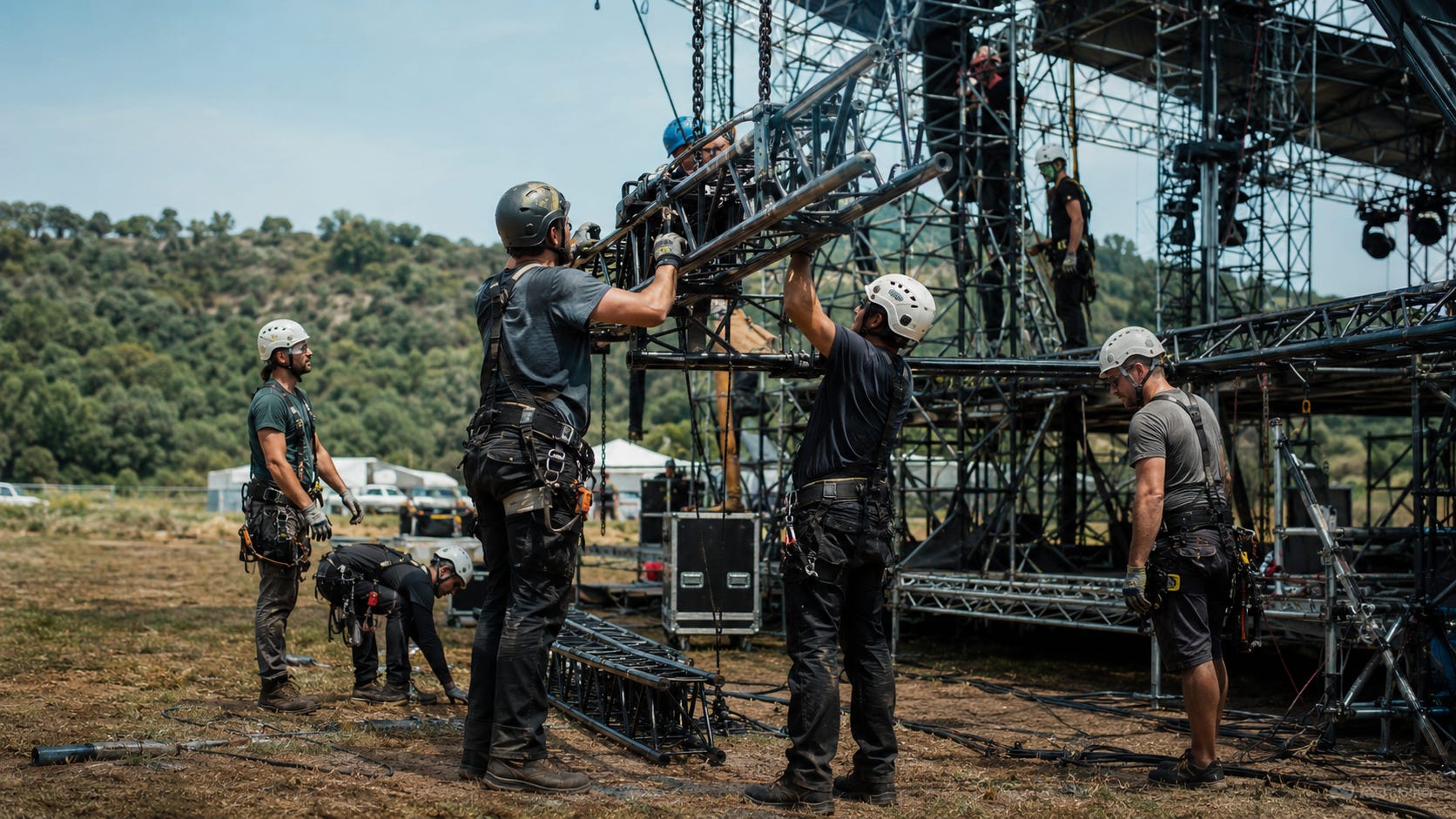
The people who spend days or weeks building the site. The touring crews moving through multiple cities without enough rest. The volunteers who are sometimes treated less like participants and more like a free labor reservoir. The vendors handed poor locations and unrealistic promises of foot traffic.
The seasonal workers who arrive without secure contracts, adequate facilities, or any meaningful relationship to what happens next.
Regeneration that excludes the people making the gathering possible is not regeneration. It is the same extractive system wearing a biodegradable wristband with reasonable working hours, safe accommodation, and a fair and timely payment as well as accessible working environments, mental and physical health support, and clear contracts and agreements. Respect for crew, artists, volunteers, security personnel, cleaners, drivers, vendors, and support staff is also essential.
These are not extravagant demands, they are the minimum conditions for treating labor with dignity.
A festival could reduce its fuel use and still fail its workers. It could eliminate single-use cups while running its crew into the ground. It could plant trees while failing to pay local artists properly.
A regenerative framework has to be wide enough to see these contradictions.
People are not separate from the system being regenerated.
Beauty Without Structure Becomes Content
The aesthetic is not the enemy. Music, ritual, costumes, architecture, lighting, shared meals, movement, and celebration create the emotional language through which people experience community.
But aesthetic community can be distilled, packaged, branded, photographed, and sold back to us without transferring any real ownership, resilience, or capacity.
A festival may look like another world while reproducing familiar systems underneath:
Concentrated Ownership
Disposable Labor
Extractive Procurement
Weak Accessibility
Imported Resources
Temporary Brand Spectacle
Minimal Local Benefit
No Lasting Community Power
Beauty without structure becomes lifestyle content, structure without beauty becomes administration. We need both.
“The aesthetic helps us imagine another world. The structure determines whether any part of it survives.”
The Hard Questions
In a recent exchange, climate-capital writer Yoann Berno described a strong pitch as a sequence that reduces uncertainty. That principle applies directly to regenerative festival design.
A proposal can communicate breathtaking vision: clean energy, circular materials, restored ecosystems, cultural exchange, social transformation, beautiful temporary cities which is lovely!
Then somebody still has to answer the questions nobody puts on the mood board:
Who owns the clean-power system? Who pays for it? Who maintains it after the event?
Who carries the weather risk? Who absorbs the financial loss if ticket sales fall short?
Who is responsible if the event does not return the following year?
Which costs can be shared between promoters, municipalities, landowners, sponsors, utilities, foundations, and public institutions?
Who benefits after the gates close? How will success be measured?
A regenerative festival that can express its values beautifully but cannot answer questions about ownership, governance, maintenance, risk, and accountability is not yet a durable system, it is an aspiration in a press release.
The questions do not have universal answers. Different events operate on different land, under different laws, at different scales, with wildly different budgets and asking them early separates an operational model from attractive language.
Sponsors Could Fund What People Actually Need
Much festival sponsorship remains focused on attention with logo placements, product sampling, VIP areas, and temporary installations designed to look impressive in photographs and disappear immediately afterward.
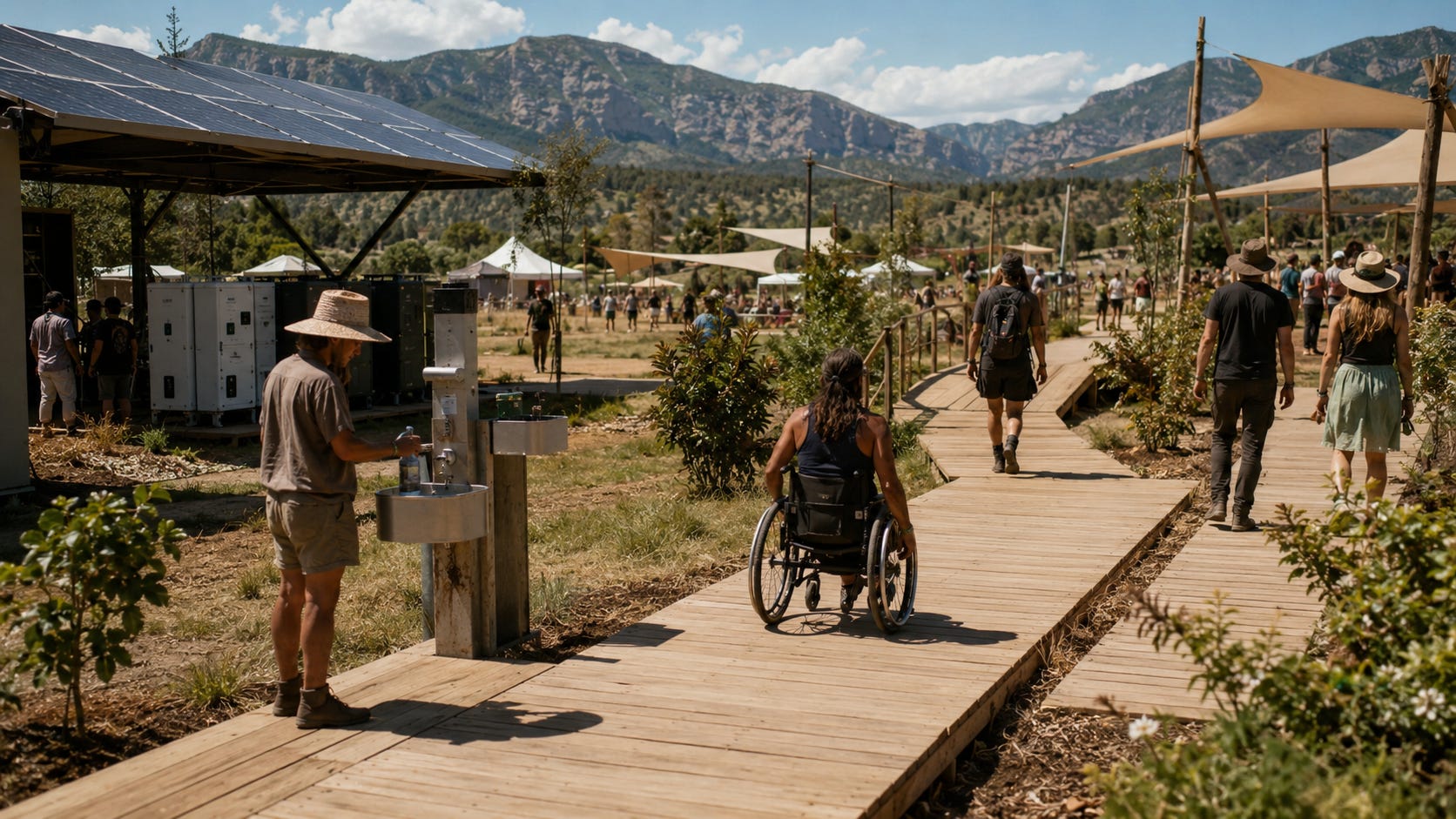
There is another model available. Commercial partners could help fund infrastructure that the event, its workers, and the surrounding community genuinely need:
Clean-energy Systems
Free Drinking Water
Shade and Cooling
Accessible Viewing and Transport
Reusable Material Systems
Worker Welfare Facilities
Local Cultural Programming
Community Grants
Equipment That Remains Useful After the Event
The difference is between buying presence and funding value.
This is part of what we are exploring through Orbit Activations: how commercial partners might move beyond aesthetic adjacency and contribute to the systems that make cultural gatherings healthier, safer, more accessible, and more durable.
Not as a charitable side project. Not as another logo attached to somebody else’s work. As a more useful model of participation in culture.
The Developing Vision
The design philosophy being developed through Nuclear Fusion Events begins with a question that does not have an easy answer:
How can a temporary gathering function as a prototype for a healthier permanent system?
Not a demonstration of perfection but a prototype. Something tested under real conditions.
Something that produces information about what works, what fails, what costs too much, what communities actually want, what sponsors will support, and what public institutions can help maintain.
A prototype does not have to pretend it has solved everything, it has to leave the next attempt better informed and more capable than the last.
Nuclear Fusion Events remains a developing vision. The framework, partnerships, funding, locations, and operating model are still being explored.
The orientation is clearer:
We are not interested in constructing a perfect world for a weekend and erasing it without evidence.
We are interested in what can survive the teardown.
The Rehearsal
A festival at its best is a rehearsal.
A temporary attempt at organizing collective life around music, movement, creativity, community, beauty, and shared experience rather than the ordinary transaction logic of daily life.
The question is whether we are rehearsing something worth carrying forward.
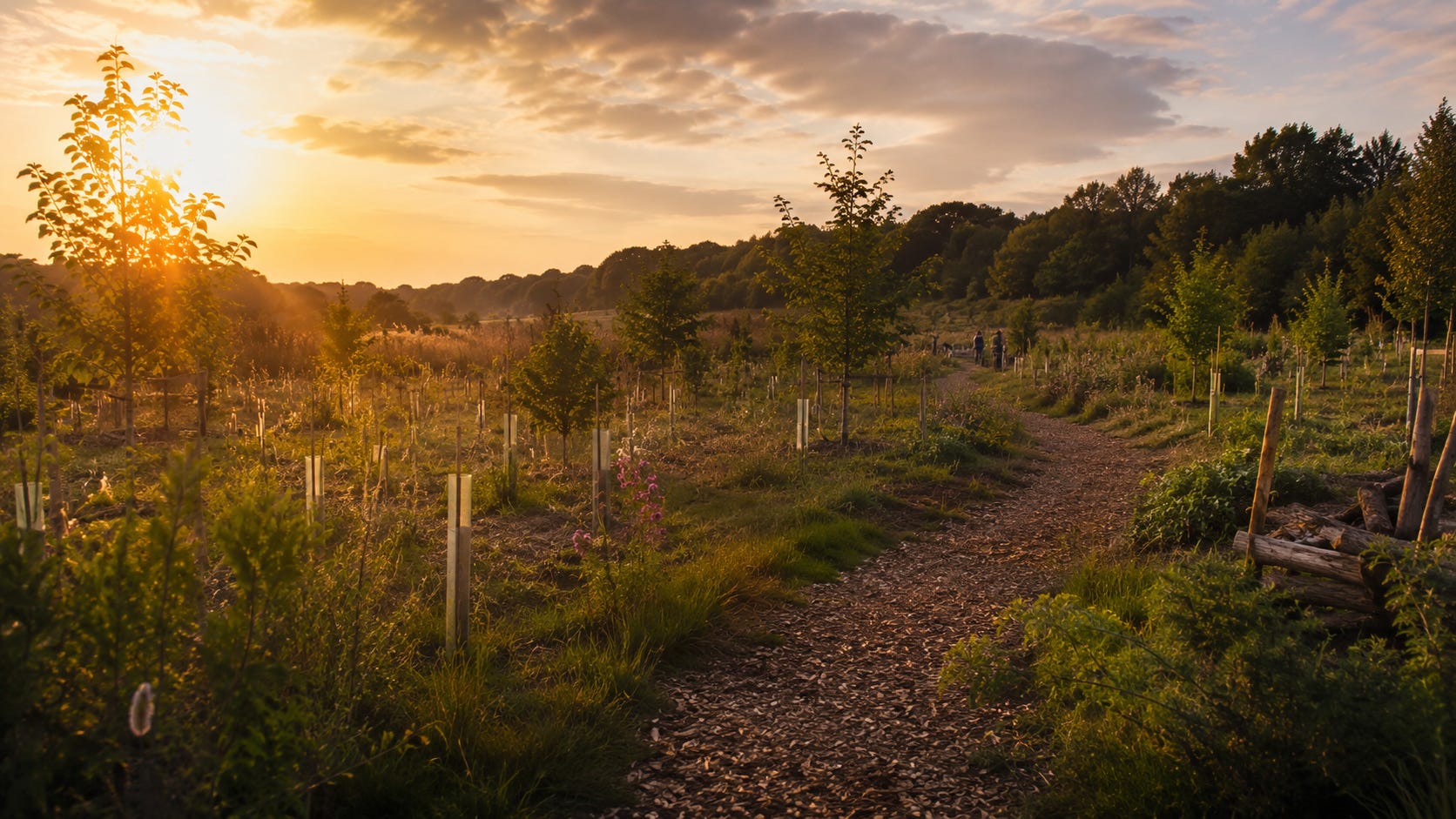
Leave No Trace is a responsible minimum. Regeneration asks what deserves to remain.
A festival should not only prove that people can live differently for three days. It should strengthen their capacity to live differently afterward.
The music, the ritual, and the moment on the dancefloor at four in the morning when another world feels possible are not diminished by asking what remains when the sound system turns off. They become more meaningful.
The goal is not to build a perfect temporary world and erase it without evidence.
The goal is to let something beautiful survive the teardown.
For essays about dancefloors, festivals, technology, sustainability, artist culture, and the systems hiding underneath all of it, subscribe to The Cosmic Dancefloor.
Agents of The Universe
Agents of The Universe explores consciousness, ecology, technology, and the architecture of the culture we are building.
If the ideas in this essay feel like part of a longer argument, the book is where that argument lives.
Listen to the podcast on Spotify
Nuclear Fusion Events
The design work behind Nuclear Fusion Events is developing around the question raised in this essay:
What would a festival look like if it were designed to leave a beautiful trace rather than merely a clean field?
More on that as the framework develops.
Orbit Activations
Orbit Activations is exploring how commercial partners can move beyond logo placement toward practical contributions to clean power, water, accessibility, local culture, worker welfare, mobility, and infrastructure that remains useful after the event.
Source Notes
1. Terraforma
Terraforma’s official materials describe the project as an experimental music festival founded in 2014 with sustainability, care, and landscape restoration among its central values. Terraforma held eight Villa Arconati editions between 2014 and 2023. Its official sustainability materials document the restoration of the historic garden labyrinth using 500 hornbeam specimens and describe architecture and landscape restoration as core parts of the project.
2. Roskilde Festival
Roskilde Festival’s official reporting describes the event as nonprofit, with profits donated to humanitarian and cultural causes. It reports DKK 476 million donated since 1972 and a DKK 15.4 million surplus from the 2025 festival designated for initiatives supporting children and young people.